
Executive Summary
High-impact leadership does not emerge from hiring decisions or development programs alone. It is built through a connected system that integrates leadership assessment, development, and transition. This blog explains why fragmented approaches fail and how organisations can build leadership capability that delivers predictable impact.
Introduction: The Leadership Problem Most Organisations Misdiagnose
Many organisations believe their leadership challenge is about capability. In reality, it is about predictability.
Leaders are hired with strong credentials. Development programs are rolled out. Yet execution slows, trust erodes, and results vary widely across teams. These failures are rarely due to lack of talent.
They are the outcome of disconnected leadership assessment and development efforts that do not account for context, transition, or real operating conditions. This is where most leadership strategies quietly break down.Many organisations believe their leadership challenge is about capability. In reality, it is about predictability.
Leaders are hired with strong credentials. Development programs are rolled out. Yet execution slows, trust erodes, and results vary widely across teams. These failures are rarely due to lack of talent.
They are the outcome of disconnected leadership assessment and development efforts that do not account for context, transition, or real operating conditions. This is where most leadership strategies quietly break down.
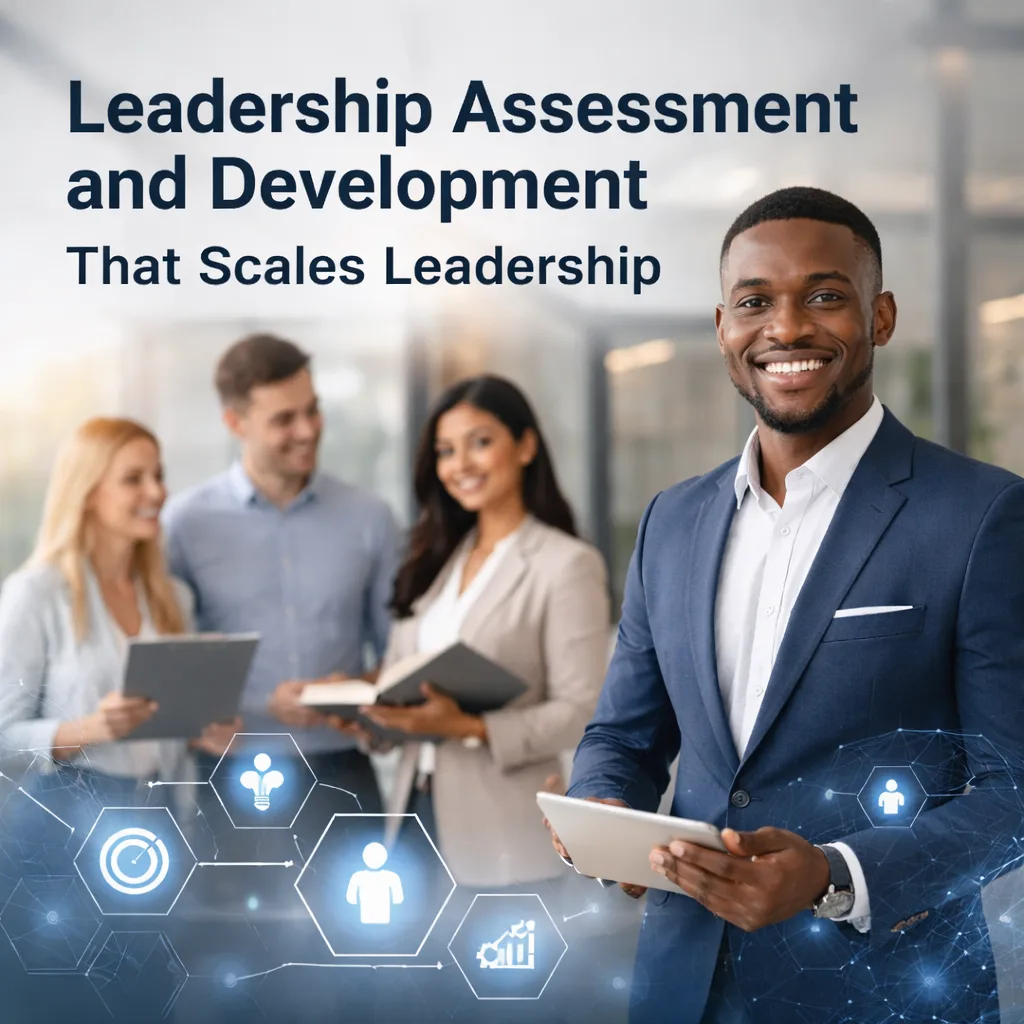
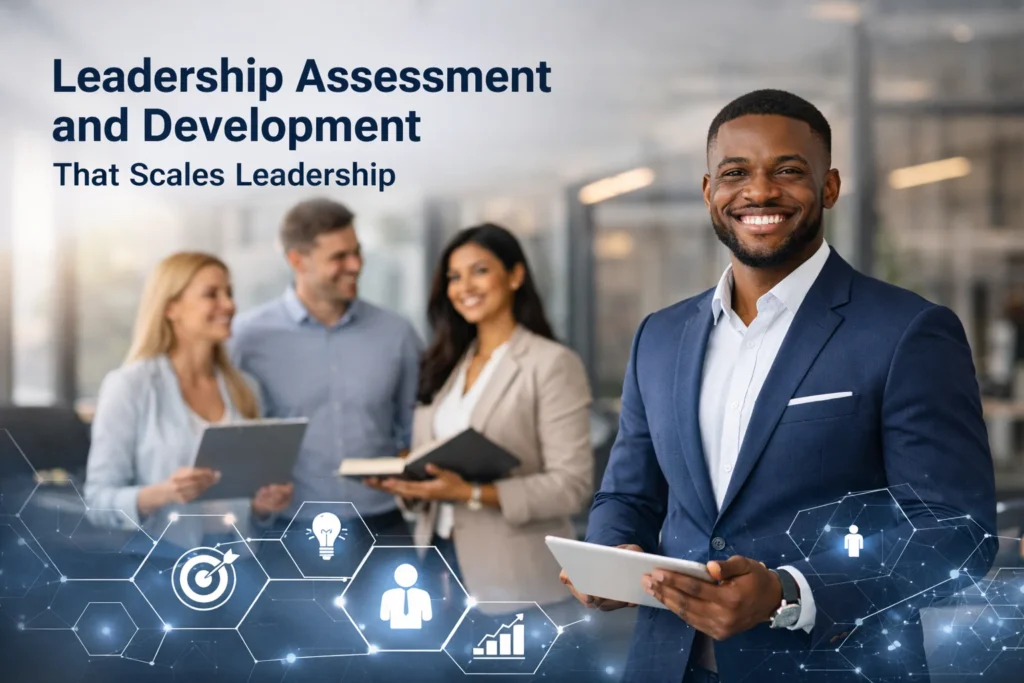
Leadership Assessment and Development are Not Two Activities
Leadership assessment and development are often treated as separate initiatives owned by different teams. One evaluates. The other builds. Neither takes responsibility for outcomes.
In practice, leadership assessment and development form a single leadership lifecycle.
Assessment should clarify whether a leader can succeed in a specific role and context. Development should ensure that capability is strengthened through real execution, not theoretical learning. When these two are disconnected, organisations repeat the same leadership mistakes with different people.
This disconnect is the root cause of many leadership failures.
Why Leadership Assessment Alone Does Not Prevent Failure?
Leadership assessment has evolved significantly. Cognitive tests, behavioural diagnostics, situational judgement tools, and structured interviews are widely used.
The Limitations of Most Leadership Assessment Tools
Leadership assessment tools are often applied correctly but used poorly.
Results are reviewed, discussed, and documented, but rarely integrated into:
- Hiring decisions with sufficient weight.
- Onboarding priorities.
- Stakeholder alignment.
- Early performance expectations.
Without follow-through, assessment becomes informational rather than protective. Leadership risk remains unchanged.
Why Leadership Development Programs Rarely Deliver Impact?
Leadership development programs are designed with good intent. Coaching, workshops, and learning journeys promise growth.
Where Leadership Development Programs Break
Most leadership development programs fail because they start too late and operate too generically.
They assume the leader is already in role, already aligned, and already trusted. They focus on skills without addressing:
- Role clarity.
- Cultural integration.
- Decision expectations.
- Stakeholder dynamics.
Development without context strengthens knowledge, not impact.
The Overlooked Phase: Leadership Transition
The most fragile phase of leadership is not selection or development. It is a transition.
The first 90 to 180 days determine whether a leader gains credibility or loses momentum. During this period:
- Expectations are often implicit.
- Stakeholders operate with assumptions.
- Cultural norms are learned informally.
- Early missteps are magnified.
Most leadership assessment and development models ignore this phase entirely. That omission is costly.
Introducing SAT: A Leadership Assessment and Development Framework From Planet Ganges
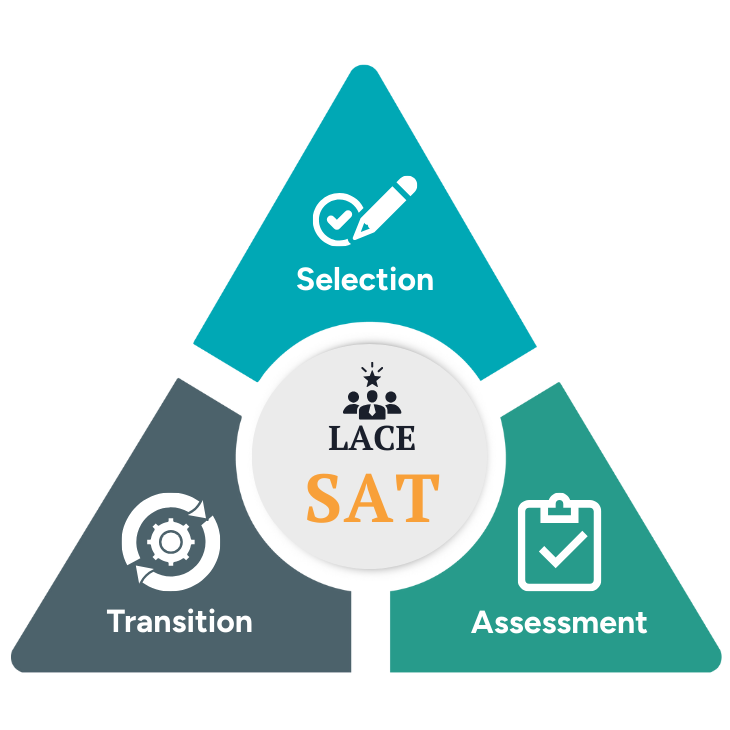
SAT stands for Search, Assessment, and Transition. It is a leadership assessment framework designed to treat leadership success as a connected system, not a sequence of isolated activities.
SAT exists because leadership impact cannot be predicted by resumes, assessments, or training alone. It must be designed across the full leadership lifecycle.
SAT reframes leadership assessment and development as a single, integrated process that begins before hiring and extends well beyond onboarding.
How the SAT Framework Actually Builds High-Impact Leaders
SAT works by connecting three critical leadership moments.
Search With Context, Not Just Credentials
Leadership search begins with clarity on role outcomes, operating context, and cultural expectations. This prevents early misalignment.
Assessment That Reduces Decision Risk
Leadership assessment tools are used to evaluate judgment, behaviour, and contextual readiness. The goal is not scoring, but evidence-based decision-making.
Transition That Protects Leadership Investment
Assessment insights shape transition priorities. Leaders receive structured support to align expectations, build trust, and deliver early impact.
Through this integration, leadership assessment and development move from aspiration to execution.
Why Integrated Leadership Assessment and Development Matters for Scale
As organisations grow, leadership decisions multiply. Errors compound faster than successes.
Integrated leadership assessment and development:
- Reduces leadership failure rates.
- Accelerates time to impact.
- Improves decision consistency.
- Builds confidence across leadership layers.
This is how leadership becomes a scalable organisational capability rather than a recurring risk.
Ready to Build Leaders Who Deliver Predictable Impact?
High-impact leaders are not found. At Planet Ganges, they are built through systems that connect assessment, development, and transition.
Frameworks like SAT by Planet Ganges exist to help organisations move beyond fragmented leadership efforts and create leadership capability that delivers consistently.
Frequently Asked Questions
Leadership assessment and development is a structured approach to identifying leadership readiness and building capability over time. It combines evaluating a leader’s potential, judgement, and fit with role-specific development that strengthens their ability to deliver results in a real organisational context.
A leadership assessment framework defines how organisations evaluate leadership capability, risk, and readiness using structured criteria. It ensures leadership decisions are based on evidence rather than intuition and supports better hiring, succession, and transition outcomes.
Effective leadership assessment tools include cognitive and critical thinking assessments, behavioural and personality diagnostics, situational judgement tests, structured interviews, and 360-degree feedback. These tools are most effective when used together and applied to real roles and context requirements.
Leadership development programs often fail because they operate in isolation from role expectations, decision-making authority, and organisational context. Without integration into performance systems and leadership transitions, development improves knowledge but not leadership impact.
Leadership transition plays a critical role in determining long-term leadership success. The first 90 to 180 days shape credibility, trust, and execution momentum. Without structured transition support, even capable leaders struggle to integrate and deliver results.
The SAT framework integrates Search, Assessment, and Transition into a single leadership system. It ensures leaders are selected with clarity of context, assessed with evidence, and supported through structured transitions, so leadership assessment and development lead to predictable impact.