
Executive Summary
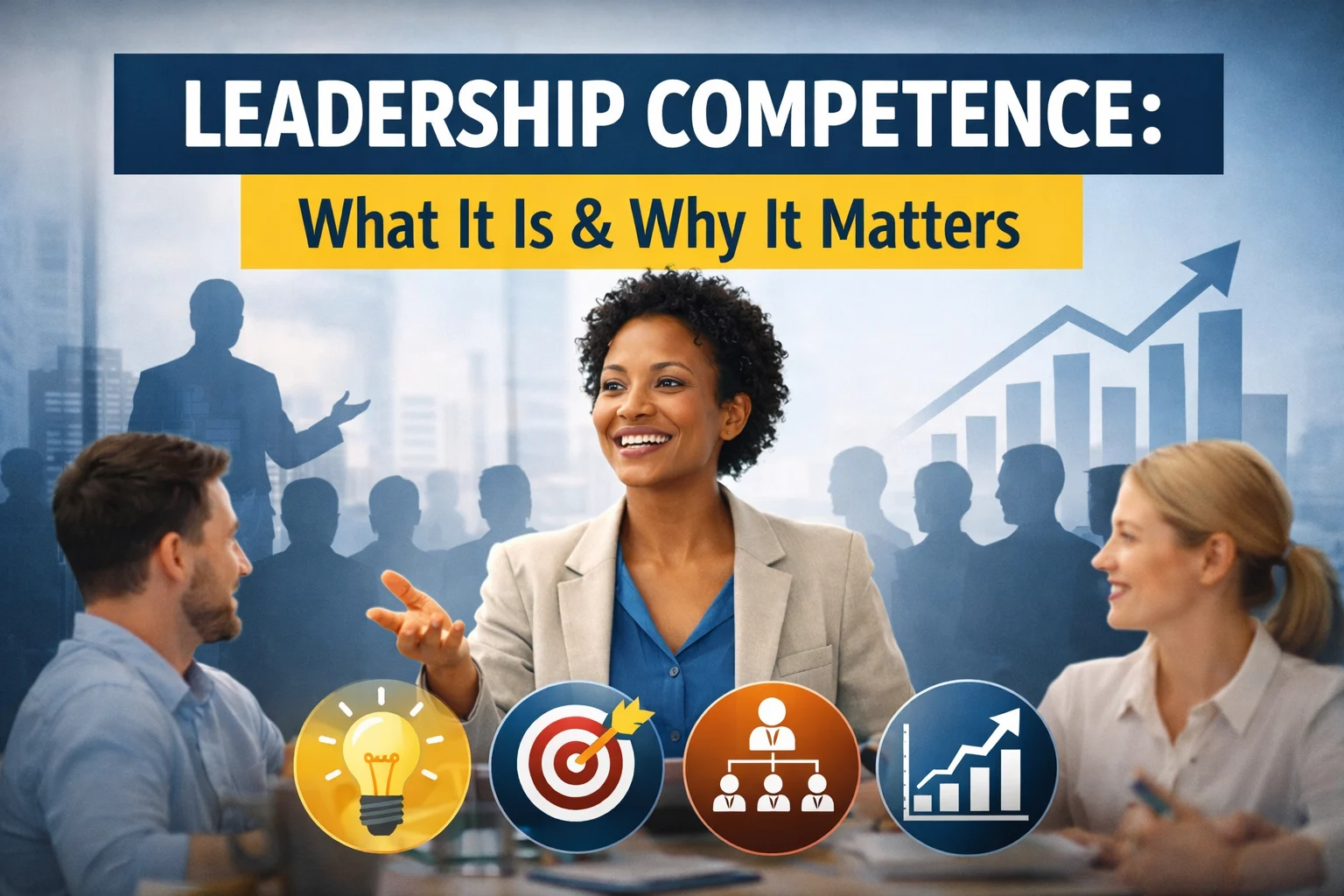
Leadership competence is not about individual brilliance. It is about how reliably an organisation makes decisions, aligns leaders, and executes strategy amid complexity. This article demonstrates why leadership competence must be viewed as an organisational capability, critiques where most models fall short, and shows how integrated frameworks like LACE enable organisations to deliver results at scale consistently.
Introduction
If your business is planning to grow 5x or even 10x over the next few years, a hard question needs to be answered early.
Will your leadership capability scale at the same pace?
Many organisations invest heavily in strategy, markets, and systems, only to discover that execution slows as they grow. Decisions take longer. Leaders interpret priorities differently. Teams wait for direction instead of acting with confidence.
These are not operational problems. They are leadership competence problems.
This guide examines leadership competence through an organisational lens. Not as a list of skills, but as a capability that determines whether growth plans translate into results.
What Leadership Competence Really Means?
Leadership competence is often described as an individual quality. Vision, communication, empathy, or decision-making are commonly cited as defining traits. While these matters do not explain why some organisations execute reliably while others struggle despite having capable leaders on paper.
In practice, leadership competence shows up in how an organisation thinks, decides, and acts under pressure. It is visible in the quality of decisions made, the clarity of priorities, and the consistency with which teams move work forward. Organisations with strong leadership competence do not rely on individual heroics. They operate with shared context, disciplined execution, and predictable outcomes.
This distinction is important. There is a meaningful difference between having talented leaders and having leadership capability embedded across the organisation.
Why Leadership Competence Matters More Than Ever?
As organisations grow, complexity increases faster than structure. Informal coordination breaks down. Decisions are slow. Execution becomes uneven. At this stage, leadership competence becomes the mechanism that holds strategy, people, and performance together.
Strong leadership competence reduces dependency on founders or a small group of senior leaders. It creates clarity around who decides what, how priorities are set, and how accountability works. This directly impacts execution predictability.
The absence of leadership competence is also a business risk. Poor decision quality, misaligned leadership teams, stalled initiatives, and high leadership turnover are often symptoms of weak leadership capability rather than flawed strategy. Organisations rarely fail because they lack ambition. They fail because leadership competence does not scale at the same pace as growth.
From Leadership Skills to a Leadership Competency Framework
Most organisations invest in leadership skills. Training programs focus on communication, influence, emotional intelligence, or strategic thinking. These efforts are well-intentioned, but they often operate in isolation.
Limits of Standalone Leadership Skills and Competencies
Leadership skills without reinforcement fade under pressure. When priorities shift or targets tighten, behaviour reverts to habit. Skills that are not embedded into decision-making, performance reviews, and accountability structures do not survive real operating conditions.
This is why leadership development initiatives often feel impactful in the moment but fail to change outcomes over time.
Why a Leadership Competency Framework Is Necessary
A leadership competency framework provides shared clarity on what effective leadership looks like in a specific organisational context. It translates abstract skills into observable behaviours tied to strategy and execution.
More importantly, it enables assessment. Leaders can be evaluated against defined expectations rather than subjective impressions. Development becomes targeted. Leadership competence becomes measurable and actionable rather than aspirational.
Why Most Leadership Competency Models Fail in Practice?
A leadership competency model is only as effective as its integration into the organisation. Many models fail because they are designed as reference documents rather than operating tools.
Common failure points include limited connection to real decision-making, weak linkage to hiring and promotion, and little influence on performance reviews or rewards. When leadership models sit outside the core operating system, they do not shape behaviour.
Without ownership and reinforcement, even well-designed leadership competency models remain theoretical. They describe what good leadership looks like, but do not change how leadership actually functions.
Introducing LACE: A Systemic Approach to Leadership Competence
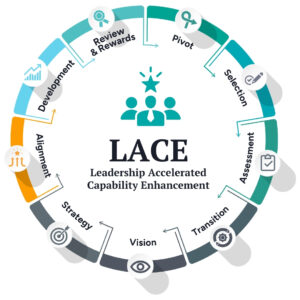
LACE stands for Leadership Accelerated Capability Enhancement. It is not a leadership program or a training intervention. It is a systemic framework that integrates leadership competence into how organisations operate, decide, and execute.
The premise is simple. Leadership competence cannot be built in isolation. It must be developed, reinforced, and sustained across the full leadership lifecycle. LACE focuses on capability rather than personality and on systems rather than events.
How the LACE Framework Builds Leadership Competence at Scale
Leadership competence strengthens when it is embedded across multiple organisational mechanisms.
LACE begins with rigorous assessment to ensure leadership decisions are based on evidence rather than intuition. Selection and role fit are treated as strategic choices, not hiring tasks.
Transition support ensures leaders become effective in context, not just in title. Vision and strategy alignment create shared clarity, enabling leaders to operate from the same strategic frame.
Capability development under LACE is grounded in real work. Leaders build competence while executing priorities, not in abstract classrooms. Reviews and rewards reinforce expected behaviours, making leadership competence visible and consequential.
When gaps persist, the framework supports decisive pivots. Leadership competence is protected by making timely structural and people decisions rather than avoiding them.
Through this integration, leadership competence becomes repeatable and scalable rather than dependent on individuals.
Leadership Competence as a Long-Term Organisational Advantage
In stable environments, leadership gaps remain hidden. Growth, change, or disruption exposes them quickly.
Organisations that treat leadership competence as a core capability scale with greater confidence. Decisions improve. Execution stabilises. Alignment increases across teams and locations. Leadership becomes an asset rather than a constraint.
Ignoring leadership competence has real costs. Delayed initiatives, strategic drift, leadership churn, and cultural erosion compound over time. Addressing leadership competence early creates resilience that lasts.
Ready to Build Leadership Competence That Delivers?
Leadership competence matters when treated as an organisational capability rather than just a set of skills. Frameworks like LACE and growth partners like Planet Ganges help organisations move from leadership intent to tangible, lasting impact.
For growing organisations, leadership competence is essential. It distinguishes those that scale reliably from those that struggle to scale.
Frequently Asked Questions
Leadership competence refers to an organisation’s ability to make clear decisions, align leaders, and execute strategy consistently. It goes beyond individual skills and reflects how leadership operates as a system.
Leadership skills focus on individual abilities such as communication and empathy. Leadership competence focuses on how those skills are reinforced, assessed, and applied across the organisation to produce reliable outcomes.
A leadership competency framework defines the behaviours and capabilities leaders need to demonstrate in order to deliver strategy effectively. It provides clarity, assessment standards, and a foundation for development.
Most leadership competency models fail because they are not integrated into hiring, performance reviews, rewards, or decision-making. Without reinforcement, they remain theoretical.
Leadership competence is built by integrating assessment, development, alignment, and reinforcement across the leadership lifecycle. Systemic frameworks like LACE help organisations do this consistently.