

Many organizations define bold strategies but struggle to turn them into consistent execution. A clear organizational transformation roadmap helps leaders translate vision into coordinated actions across teams, systems, and priorities.
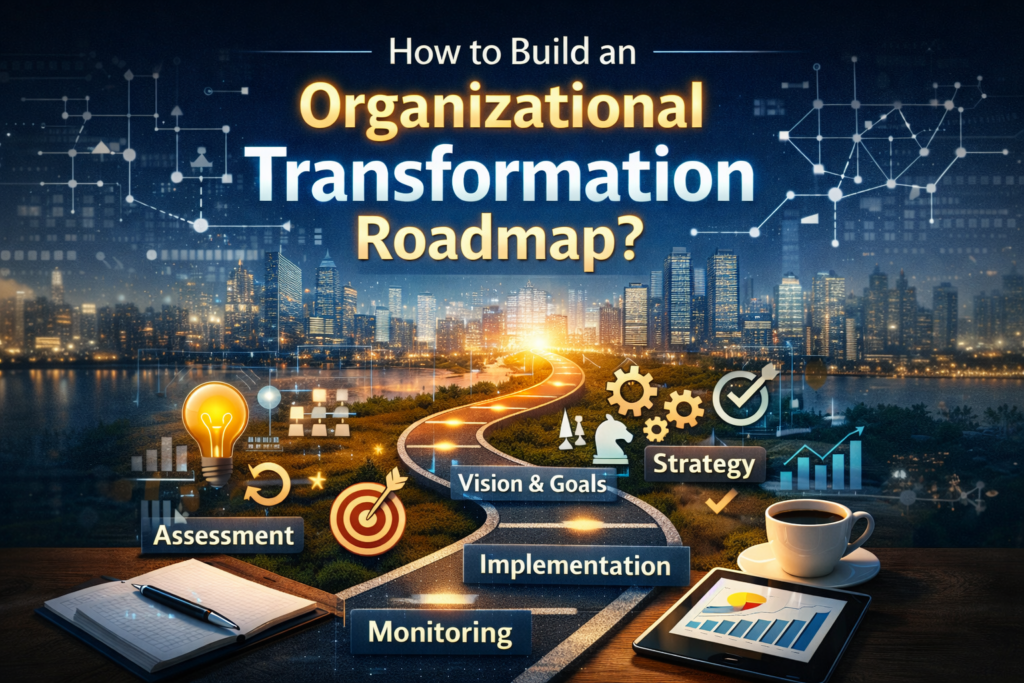
When leadership alignment, governance discipline, and measurable outcomes come together, transformation moves from aspiration to sustained results.
Why Every Organization Needs a Clear Organizational Transformation Roadmap?
Many transformation efforts fail not because the strategy is weak, but because execution lacks structure. Organizations often launch multiple initiatives without connecting them to a shared strategic direction. This creates confusion, competing priorities, and fragmented progress.
A structured organizational transformation roadmap helps organizations overcome these challenges by aligning leadership, priorities, and execution systems. It ensures that every initiative supports the broader strategic direction and that leadership decisions reinforce the same outcomes across the enterprise.
Without a roadmap, transformation becomes a series of disconnected projects. With a roadmap, it becomes a coordinated leadership journey.
What Is an Organizational Transformation Roadmap?
An organizational transformation roadmap is a structured framework that guides an enterprise from its current state to a future strategic vision. It connects strategic goals with execution priorities, leadership accountability, and measurable outcomes.
Unlike operational project plans, a transformation roadmap focuses on enterprise-wide change that unfolds over time. It helps leaders prioritize initiatives, sequence execution efforts, and track transformation progress across the organization.
A simple comparison illustrates the difference.
| Project Plan | Organizational Transformation Roadmap |
| Focuses on tasks and deliverables | Focuses on strategic change |
| Short-term operational scope | Long-term organizational shift |
| Managed by project teams | Led by leadership teams |
| Limited departmental impact | Enterprise-wide transformation |
A roadmap therefore acts as the bridge between strategic ambition and operational execution.
Key Components of a Strong Transformation Roadmap
A transformation roadmap must combine strategic clarity with execution discipline. Several core elements ensure that the roadmap remains practical and effective.
1. Vision and Strategic Direction
Transformation begins with a clear strategic vision that defines where the organization is heading. This vision aligns leadership priorities and helps teams understand why change is necessary. When the strategic direction is clear, transformation initiatives remain focused on long-term outcomes rather than short-term activity.
2. Current State Diagnosis
Leaders must understand the organization’s current capabilities before defining the transformation journey. A thorough assessment reveals operational gaps, cultural barriers, and leadership capability challenges that could slow execution. This diagnosis provides the baseline from which transformation progress can be measured.
3. Transformation Workstreams
Successful transformations organize initiatives into focused workstreams. These workstreams typically address areas such as growth opportunities, operational efficiency, leadership capability, digital enablement, and organizational alignment. Grouping initiatives into workstreams prevents fragmentation and keeps transformation efforts structured.
4. Governance and Execution Discipline
Transformation requires structured governance that reinforces accountability and ensures progress remains visible. Leadership teams must establish regular review cycles where priorities are evaluated, decisions are clarified, and execution progress is assessed. This governance rhythm maintains momentum and prevents transformation initiatives from drifting.
5. Metrics and Performance Tracking
Clear performance metrics help leaders understand whether transformation efforts are producing results. Financial indicators, operational improvements, and leadership performance metrics all contribute to measuring transformation impact. Consistent measurement enables organizations to refine their roadmap as the transformation evolves.
Organizational Transformation Roadmap: A Step by Step Leadership Framework
A practical transformation roadmap follows a structured progression that connects strategy with execution.
Step 1: Define the Transformation Vision
Leaders begin by articulating a clear strategic ambition that describes the future state of the organization. This vision must be communicated consistently so that all leadership teams understand the direction of the transformation.
Step 2: Diagnose Organizational Readiness
Organizations assess operational capabilities, leadership maturity, and cultural readiness. This step helps identify the gaps that the transformation must address and highlights areas that require leadership attention.
Step 3: Identify Strategic Workstreams
Transformation priorities are grouped into workstreams that focus on the most critical areas of change. These workstreams help leadership teams coordinate initiatives and prevent competing priorities across departments.
Step 4: Design the Transformation Roadmap
Leaders build the transformation roadmap by sequencing initiatives and defining execution timelines. This roadmap connects strategic priorities with operational initiatives that can be implemented in stages.
Step 5: Establish Governance and Accountability
Transformation governance structures ensure that leadership decisions remain aligned with the roadmap. Regular leadership reviews track progress, resolve obstacles, and reinforce accountability across teams.
Step 6: Reinforce Leadership Behaviour and Execution Discipline
Transformation succeeds when leadership behaviours support the strategic direction. Organizations must reinforce accountability, decision clarity, and cross functional collaboration to sustain transformation outcomes.
Common Mistakes That Derail a Transformation Roadmap
Many transformation initiatives struggle because organizations underestimate the complexity of execution. Several common mistakes can weaken transformation momentum.
• Treating transformation as a technology project rather than a leadership challenge
• Launching too many initiatives without clear prioritization
• Lack of leadership alignment across business functions
• Weak governance structures that fail to reinforce accountability
• Ignoring leadership capability gaps that affect execution
When these issues are not addressed, transformation efforts become fragmented and progress slows.
Organizational Transformation Roadmap Requires Leadership Alignment
An effective organizational transformation roadmap depends heavily on leadership alignment. When leadership teams interpret strategy differently, transformation initiatives lose focus and execution becomes inconsistent.
Leadership alignment ensures that strategic priorities translate into coordinated actions across the organization. Leaders must clarify enterprise goals, establish accountability, and reinforce execution discipline across functions.
Frameworks such as the LACE transformation model by Planet Ganges help organizations integrate leadership alignment, strategy clarity, capability development, and governance systems. When these elements work together, the transformation roadmap becomes a practical guide for sustained organizational change.
Building a Sustainable Change Roadmap for Long Term Growth
A successful change roadmap evolves as the organization grows and learns. Leaders must treat transformation as an ongoing journey rather than a one time initiative.
Sustainable transformation typically requires several ongoing practices.
• continuous leadership alignment across business units
• disciplined governance reviews that track execution progress
• reinforcement of behaviours that support transformation priorities
• adjustments to the roadmap based on performance insights
• leadership capability development to sustain long term execution
Organizations that maintain these practices build transformation capability that extends beyond a single initiative.
Final Words
An organizational transformation roadmap provides leaders with the structure needed to translate strategic ambition into disciplined execution. It connects vision, leadership priorities, and operational initiatives into a coordinated transformation journey.
Organizations that succeed in transformation focus on leadership alignment, governance discipline, and measurable outcomes. When these elements are integrated effectively, transformation shifts from a strategic aspiration to a sustained organizational capability.
FAQs
An organizational transformation roadmap is a structured framework that guides an enterprise from its current state to a future strategic vision by aligning leadership priorities, initiatives, and execution milestones.
A transformation roadmap is created by defining a strategic vision, assessing current organizational capabilities, identifying transformation priorities, sequencing initiatives, and establishing governance and performance metrics.
The key elements include strategic vision, capability assessment, transformation workstreams, execution governance, leadership accountability, and measurable performance indicators.
Transformation initiatives often fail due to leadership misalignment, unclear priorities, weak governance structures, and insufficient focus on leadership capability and cultural change.
A transformation roadmap focuses on enterprise level strategic change and long term organizational evolution, while a project plan manages specific operational tasks within a limited scope.