

Organizations across industries are under constant pressure to evolve. Market disruptions appear faster, customer expectations continue to rise, and competitive advantage rarely lasts long. Many companies respond by launching transformation programs. Yet only a small number manage to sustain the results.
The difference often lies in strategy. Transformation is not a collection of isolated initiatives. It is a coordinated shift in leadership priorities, organizational capabilities, operating models, and execution discipline. When designed correctly, business transformation strategies help organizations move beyond short-term improvement and build long-term growth engines.
This article explores the most important growth transformation strategies organizations can adopt to achieve sustainable performance.
Why Business Transformation Strategies Are Critical for Sustainable Growth?
Many organizations approach transformation as a reaction to immediate challenges. Leaders attempt to improve efficiency, reduce costs, or introduce new technologies. While these actions can produce temporary improvements, they rarely create sustained growth.
Sustainable transformation requires a deeper shift in how the organization operates. Leadership must rethink strategic priorities, capabilities, and execution systems. When these elements work together, transformation becomes more than a program. It becomes a structured pathway to long-term growth.
Effective business transformation strategies help organizations strengthen competitive advantage while adapting to changing markets. They ensure that strategic intent translates into coordinated action across teams, functions, and leadership levels.
10 Business Transformation Strategies That Drive Sustainable Growth
Organizations that achieve sustained transformation usually combine several strategic approaches rather than relying on a single initiative. The following strategies represent the core building blocks of successful transformation journeys.
1. Adopt a Capabilities Driven Transformation Strategy
Organizations that outperform competitors often focus on a few capabilities that differentiate them in the market. Instead of attempting to improve everything at once, they identify capabilities that directly influence growth.
These capabilities may include innovation leadership, operational agility, customer experience excellence, or advanced analytics. When organizations concentrate resources on strengthening these capabilities, transformation efforts become more focused and effective.
A capabilities-driven strategy ensures that transformation investments support long-term competitive advantage.
2. Align Leadership Around a Shared Transformation Vision
Leadership alignment is one of the most overlooked factors in transformation success. When leadership teams interpret strategy differently, departments begin to pursue conflicting priorities. Over time, this weakens execution.
Organizations must ensure that leaders share a clear understanding of transformation goals, priorities, and expected outcomes. Strategic alignment allows leadership teams to make consistent decisions and guide their organizations in the same direction.
Without alignment at the top, even strong business transformation strategies struggle to produce meaningful results.
3. Design Customer Centric Growth Transformation Strategies
Sustainable growth ultimately depends on delivering value to customers. Many transformation programs focus heavily on internal efficiency while neglecting the customer experience.
Customer-centric transformation strategies prioritize improving the customer journey across all touchpoints. Organizations examine how customers interact with products, services, and support systems. They then redesign these experiences to increase satisfaction, retention, and loyalty.
Companies that place the customer at the center of transformation often achieve stronger and more consistent growth.
4. Build Digital and Data-Driven Transformation Capabilities
Technology plays an important role in modern transformation efforts. Digital platforms, automation tools, and advanced analytics enable organizations to operate more efficiently and respond more quickly to market changes.
Data-driven capabilities help leaders make informed decisions based on real-time insights. Automation reduces operational complexity and allows teams to focus on higher-value activities.
However, technology should support broader transformation priorities. Digital initiatives succeed when they reinforce the organization’s overall growth transformation strategies.
5. Restructure Operations to Enable Scalable Growth
Many organizations operate with processes designed for stability rather than growth. As markets evolve, these processes can limit speed and flexibility.
Operational restructuring allows companies to redesign workflows, simplify decision-making, and improve collaboration between departments. Leaders examine how work moves across the organization and identify opportunities to remove unnecessary complexity.
Improved operational structures allow organizations to scale growth without increasing operational burden.
6. Strengthen Organizational Culture to Support Transformation
Culture plays a powerful role in transformation success. When employees resist change or avoid experimentation, transformation initiatives slow down.
Leaders must create environments where innovation, accountability, and collaboration are encouraged. Teams should feel comfortable testing new ideas and adapting quickly when conditions change.
A culture that supports learning and experimentation allows transformation efforts to evolve naturally rather than encountering constant resistance.
7. Establish Governance Systems That Reinforce Execution Discipline
Even well-designed transformation strategies can fail without disciplined execution. Organizations often launch ambitious initiatives but struggle to maintain momentum over time.
Strong governance systems help leaders monitor progress and address challenges early. Leadership teams establish review cycles, track performance indicators, and evaluate transformation initiatives regularly.
These governance structures ensure that transformation priorities remain visible and that execution remains consistent across the organization.
8. Build Leadership Capability to Navigate Complex Transformation
Transformation places new demands on leaders. They must manage uncertainty, guide teams through change, and make strategic decisions under pressure.
Organizations that invest in leadership capability development often see stronger transformation outcomes. Programs such as executive coaching, leadership development initiatives, and cross-functional exposure help leaders expand their strategic perspective.
Stronger leadership capability ensures that transformation strategies remain practical and executable.
9. Leverage Strategic Partnerships and Ecosystem Collaboration
Organizations increasingly rely on partnerships to accelerate transformation. Collaborating with technology providers, industry partners, or innovation ecosystems allows companies to access new expertise and capabilities.
Partnership-driven strategies help organizations adopt new technologies faster and explore innovative business models. By working with external partners, organizations can expand their capabilities without building everything internally.
These partnerships often become an important part of sustainable transformation strategies.
10. Treat Transformation as a Continuous Strategic Capability
The most successful organizations view transformation as an ongoing capability rather than a one-time initiative. Markets change continuously, and companies must adapt accordingly.
Organizations that sustain growth develop systems that support continuous improvement. They encourage innovation, monitor emerging opportunities, and adjust strategic priorities as conditions evolve.
When transformation becomes part of the organization’s operating mindset, growth becomes more resilient and sustainable.
How Planet Ganges Helps Organizations Execute Business Transformation Strategies?
While many organizations understand the concept of transformation strategies, execution often becomes the real challenge. Strategic intent must translate into disciplined action across leadership teams and operational systems.
Planet Ganges supports organizations through the LACE transformation framework, which connects leadership alignment, capability development, and execution discipline. This approach helps organizations align strategic priorities, strengthen leadership capability, and establish governance systems that sustain transformation momentum.
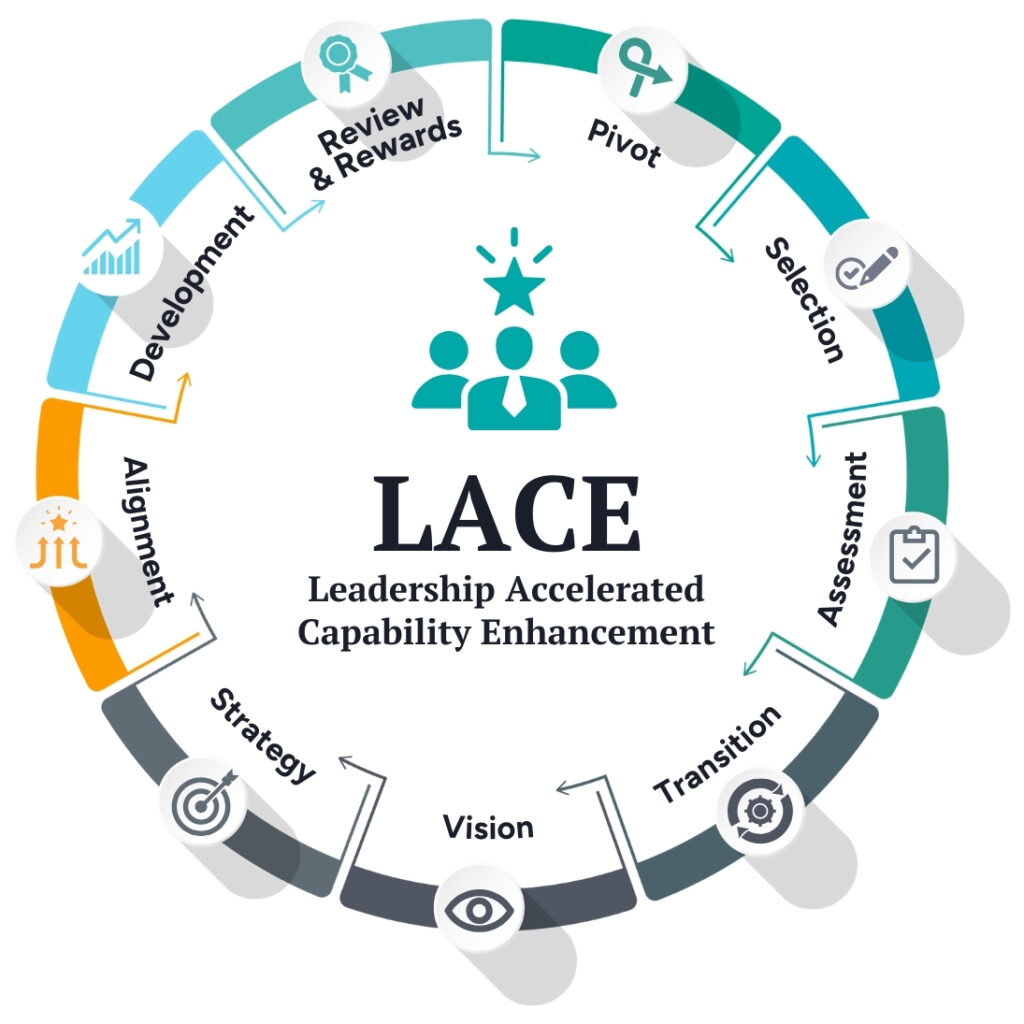
By integrating leadership alignment with structured execution systems, organizations can translate business transformation strategies into measurable outcomes and long-term growth.
Common Challenges When Implementing Business Transformation Strategies
Transformation journeys rarely progress without obstacles. Organizations frequently encounter challenges that slow execution or weaken strategic alignment.
Leadership teams may struggle to maintain consistent priorities across departments. Transformation initiatives may become fragmented when governance structures are weak. Employees may resist change if cultural alignment is missing.
Another common challenge involves capability gaps within leadership teams. Transformation requires new ways of thinking and operating, which some organizations may not yet possess.
Recognizing these challenges early allows leaders to strengthen transformation strategies before progress slows.
Conclusion
Sustainable growth requires more than incremental improvement. It demands coordinated change across leadership, capabilities, operations, and culture. Effective business transformation strategies provide the structure organizations need to navigate this complexity.
Organizations that align leadership priorities, strengthen core capabilities, and reinforce execution discipline are far more likely to achieve long-term transformation success. When these elements work together, transformation becomes not just a strategic initiative but a powerful engine for sustained growth.
FAQs
Business transformation strategies are structured approaches organizations use to redesign operations, leadership practices, and capabilities in order to achieve long-term growth and competitive advantage.
They help organizations adapt to market disruption, improve efficiency, strengthen leadership alignment, and create scalable growth models that support long-term success.
Examples include capabilities-driven transformation, customer-centric growth strategies, operational restructuring, digital transformation initiatives, and leadership capability development.
They often fail due to leadership misalignment, fragmented initiatives, weak governance systems, and insufficient organizational capability to sustain change.
Companies succeed by aligning leadership teams, prioritizing key capabilities, establishing governance systems, and continuously adapting strategies based on performance insights.