
Change is no longer a phase businesses go through. In 2026, it is the baseline. Companies across India are navigating AI adoption, workforce restructuring, market shifts, and scale challenges simultaneously — often without the internal systems to manage all of them at once.

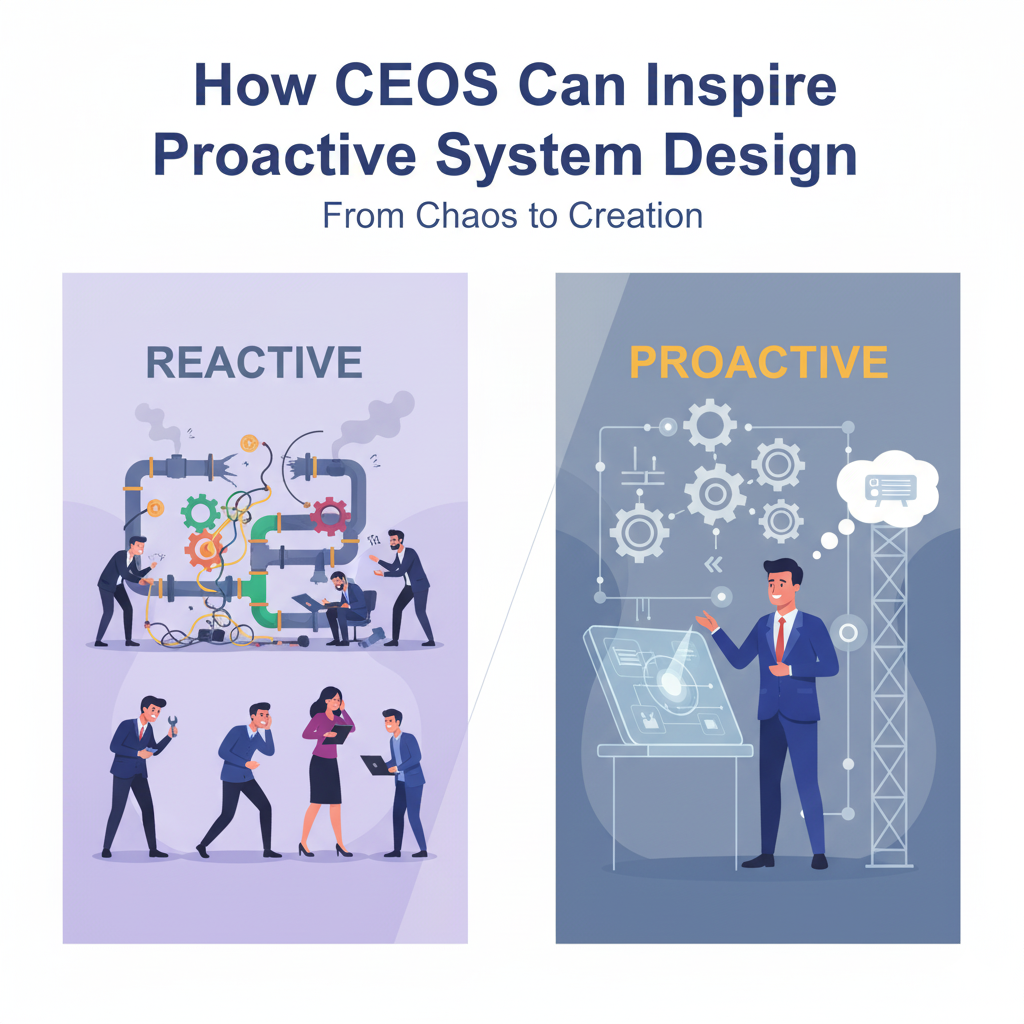
The real problem most organisations face is not a lack of strategy. Leadership teams usually know what needs to change. The breakdown happens during execution, when strategy meets real operations, real people, and real resistance.
This guide covers everything you need to know about organizational change consulting: what it is, why it matters, how the process works, and how to choose the right change management consultant to help you achieve lasting results — whether your business is based in Bangalore, Mumbai, or anywhere across India.
What Is Organizational Change Consulting?
Organizational change consulting helps businesses navigate complex transitions without losing momentum. A change management consultant works alongside leadership to align teams, close execution gaps, and make change stick across the organisation.
The simplest way to think about it: if your team understands what needs to change but keeps struggling to make it happen, that is exactly the gap these services are built to close.
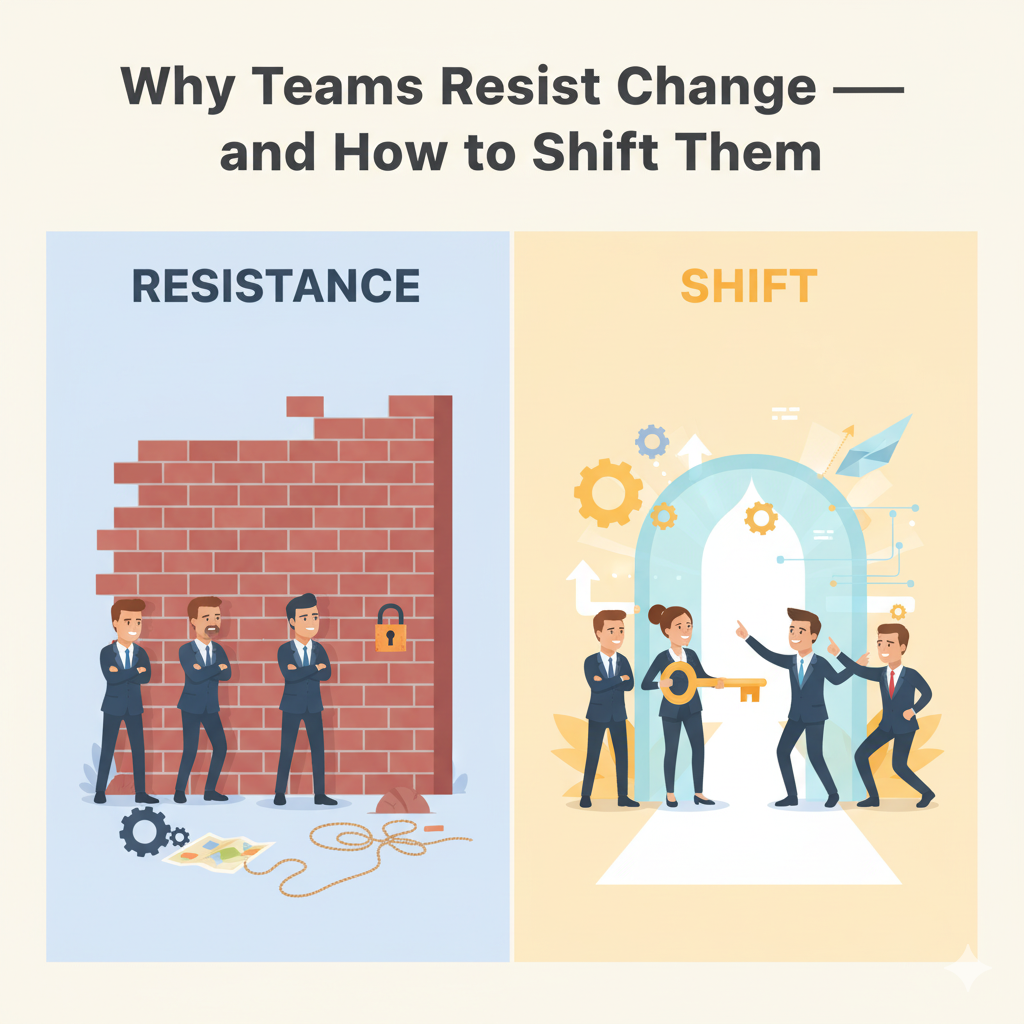
It goes well beyond advice. Good organizational change consulting focuses on how change actually gets implemented inside real operations, with real constraints, and real people who may resist, disengage, or pull in different directions.
Why Organizational Change Consulting Is Critical in 2026
The speed of business has changed dramatically. AI and automation are reshaping workflows faster than most organisations can adapt. Teams built for one model of working are now being asked to operate in a completely different one.
In high-growth markets like India, this pressure is compounded. Founder-led businesses scaling through the 200 to 1,000 crore revenue range face a specific challenge: the leadership structures, decision-making habits, and cultural norms that drove early growth begin to actively block the next phase.
The biggest risk in 2026 is not a bad strategy. It is an organisation that cannot execute the strategy it already has. That is where organizational change consulting and organisational development consulting create real, measurable value.
Types of Organizational Change Consulting
Strategic Transformation
This addresses fundamental shifts in how a business operates or competes — entering new markets, changing the business model, or restructuring for growth. Strategic transformation consulting helps leadership align around a new direction and build the execution systems to move there.
Culture Transformation Consulting
Culture is often the invisible barrier to change. Culture transformation consulting works on the mindsets, behaviours, and leadership styles that either enable or block progress. Without this layer, even well-designed strategies get absorbed by the existing culture and lose their impact.
Organisational culture transformation is not a communication exercise. It requires deliberate intervention in the informal systems — what gets rewarded, what gets tolerated, and what leaders actually model day to day.
Organizational Development Consulting
Organizational development consulting focuses on building the structural and human capability the organisation needs to perform at a higher level. This includes redesigning how work gets done, how decisions are made, and how leadership capability is developed systematically across the organisation.
Organizational effectiveness consulting goes one step further — it examines whether the organisation’s current structure, processes, and talent allocation are actually optimised for the strategy it is trying to execute. Many organisations carry significant inefficiency at this level without realising it.
Leadership Transformation
Organisations scale at the speed their leaders can lead. Leadership transformation consulting builds the decision-making capability, accountability structures, and alignment needed for leaders to operate effectively at a higher level of complexity.
Business Transformation Consulting
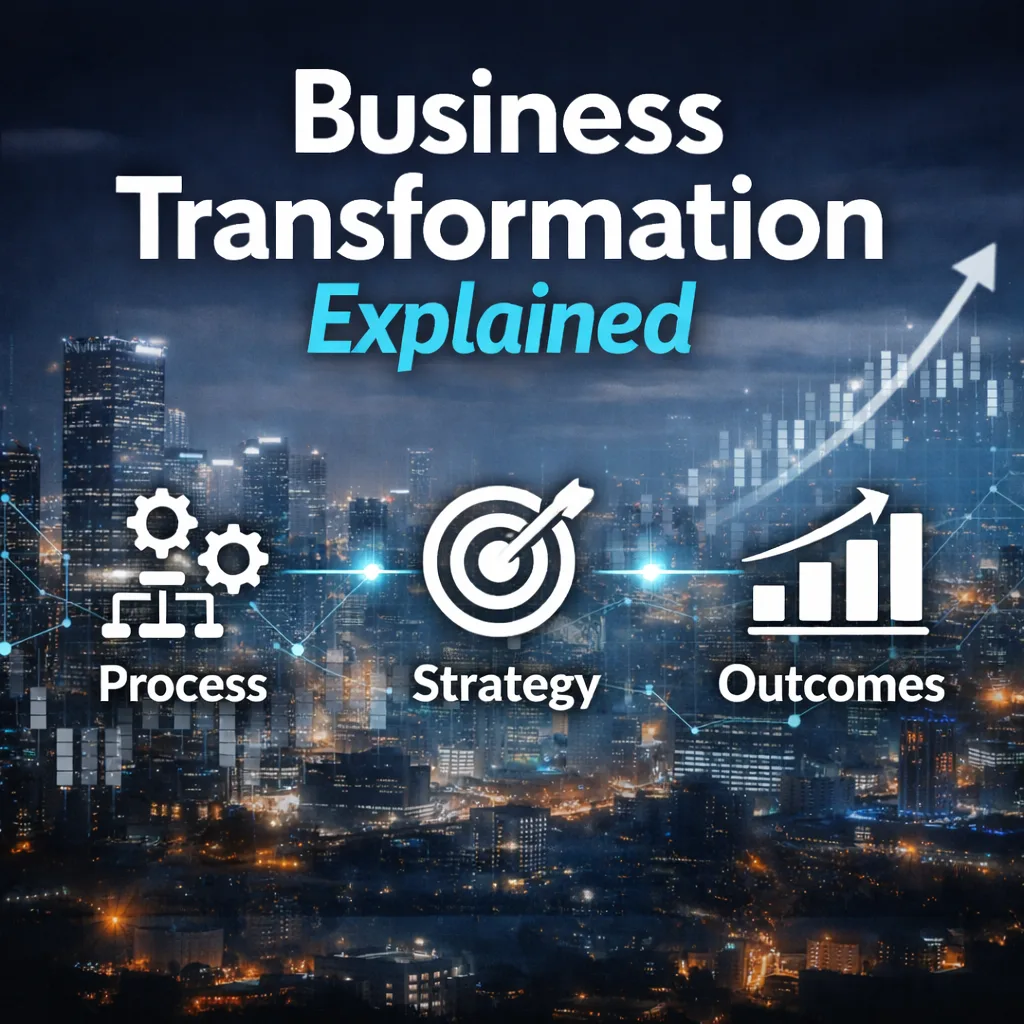
Business transformation consulting addresses enterprise-wide change that cuts across strategy, people, process, and technology. It is distinct from narrower change initiatives in that it requires coordination across multiple dimensions simultaneously, with a single integrated roadmap.
What Do Change Management Consulting Services Include?
Organisational diagnostics. Before any plan is built, the change management consultant identifies where alignment is breaking down, where execution is inconsistent, and what structural issues are slowing the organisation down.
Leadership alignment. The people at the top need to be genuinely operating from the same understanding of direction, priorities, and non-negotiables. Misalignment at leadership level multiplies across every team and every initiative.
Change strategy. Translates the business goal into a practical roadmap tied to real decisions, real timelines, and real accountability — not a document that sits in a folder.
Execution planning. Breaks strategy into clear ownership. Who is doing what, by when, and how will progress be tracked. Without this, strategy stays at the level of intention.
Capability building. Develops the skills leaders and teams need to operate effectively in the new model, including decision-making frameworks, communication norms, and accountability systems. These initiatives can be complemented by organisational development programs focused on strengthening workforce capabilities, developing leadership effectiveness, and enabling long-term organisational performance.
Performance tracking. Creates visibility into whether the change is actually happening. Not just activity tracking but outcome tracking: are behaviours changing, are results shifting, is the organisation moving.
Why Most Organizational Change Initiatives Fail
Leadership Misalignment
When leadership teams interpret the same goal differently, every layer below them operates differently. Teams receive inconsistent direction, make contradictory decisions, and lose confidence in the change initiative. The strategy does not fail because it is wrong. It fails because the people executing it are not aligned.
Weak Execution Systems
Most change efforts invest heavily in vision and planning but underinvest in execution infrastructure. There is no clear ownership, no accountability mechanism, and no system for tracking whether the organisational culture transformation is actually happening on the ground.
Capability Gaps
Leaders are often expected to lead through change without being given the tools to do it. When leaders are not equipped for the demands of a transformation, they fall back on old behaviours. The organisation follows them backward.
Change Treated as a One-Time Project
Organisations often approach change as a finite initiative with a start and end date. Once the project closes, attention moves elsewhere and the new behaviours slowly erode. Sustainable organizational development consulting embeds change into the operating model — not as a project, but as a new standard.
Organizational Change Consulting Process (Step-by-Step)

Step 1: Diagnose the Current State
The process begins with an honest assessment of where the organisation actually is. This includes examining leadership alignment, execution gaps, decision-making patterns, and structural blockers. The goal is clarity, not criticism.
Step 2: Align Vision, Strategy, and Leadership
Before any execution begins, leadership needs to reach genuine alignment — not surface-level agreement, but a shared understanding of direction, priorities, and what success looks like. Planet Ganges uses the VSA framework (Vision, Strategy, Alignment) to create this alignment in a structured, measurable way before execution begins.
Step 3: Build Leadership Capability
Leaders are equipped with the decision-making frameworks, accountability structures, and communication approaches they need to lead through the transition. This is not a training workshop. It is practical capability building tied to the real challenges the organisation is facing right now.
Step 4: Design Execution Systems
Processes, ownership structures, and tracking mechanisms are designed to support the change. Every key initiative has a clear owner, clear milestones, and a mechanism for reviewing progress. Ambiguity is replaced with structure.
Step 5: Implement and Monitor
Execution begins with active monitoring. Feedback loops are built in so problems surface quickly and adjustments happen in real time — not after the damage is done.
Step 6: Sustain Change Through Systems
The final step embeds change into the operating model. Performance systems, recognition structures, and leadership behaviours are aligned to reinforce the new way of working. Organizational effectiveness consulting at this stage ensures the gains hold long after the engagement concludes.
Organizational Change Consulting Examples
Example 1: Scaling Company in Bangalore
A Bangalore-based company growing from 50 to 200 people finds that what worked at a smaller scale is no longer working. Teams are confused about priorities, decisions take too long, and execution is inconsistent. A change management consultant helps the leadership team realign around a clear structure, builds accountability systems, and creates a rhythm of execution that scales with the organisation.
Example 2: Organizational Culture Transformation in a Family-Run Business
A Mumbai-based promoter-led enterprise is transitioning from a founder-controlled operating model to a professionally managed one. The culture — built around informal authority and relationship-based decision making — is actively blocking the new structure. Culture transformation consultants work on the informal systems: what gets rewarded, what leadership models publicly, and what new behaviours are made non-negotiable.
Example 3: Leadership Transition
A founder steps back and a new CEO takes over. The organisation is unsettled, teams are uncertain, and the new leader is struggling to establish credibility and direction. A consultant supports structured integration, builds alignment with the existing team, and creates a clear operating model that stabilises the organisation through the transition.
Benefits of Organizational Change Consulting
- Faster execution — with clear ownership and systems in place, decisions move faster and implementation gaps close more quickly
- Clearer decision-making — leaders operate from shared frameworks, reducing confusion and increasing speed at every level
- Better leadership alignment — when leadership is genuinely aligned, the impact multiplies across every team and every initiative
- Improved organizational effectiveness — processes and structures are optimised for the strategy, not inherited from an earlier phase
- Scalable systems — the organisation builds infrastructure that supports growth rather than creating chaos with every new phase
- Sustainable results — because change is embedded in systems and behaviours, it holds long after the consulting engagement ends
Key Trends in Organizational Change Consulting (2026)
AI Integrated Execution Systems
Organisations are using AI tools not just to automate tasks but to track execution, surface risks, and improve decision quality in real time.
Continuous Change as the Operating Model
The idea of change as a contained project is fading. Leading organisations are building the capability to adapt constantly — which requires ongoing organizational development consulting rather than one-time initiatives.
Culture Transformation as a Strategic Priority
Indian enterprises, particularly those transitioning from promoter-led to professionally managed models, are recognising that culture transformation consulting is not a soft-skills investment — it is a prerequisite for execution.
System-Driven Organisations
The shift is away from personality-driven execution toward organisations where systems, not heroic individuals, drive consistent results.
How to Choose the Right Organizational Change Consulting Partner
Look beyond frameworks and methodologies. Most consulting firms have polished models. The real question is whether they have the experience to apply those models inside organisations with real constraints, real politics, and real people challenges.
Evaluate their approach to leadership alignment. If a firm focuses primarily on project management and communication plans without addressing leadership alignment, they are likely to produce activity without lasting change.
Look for evidence of execution capability. Ask for examples of how their work translated into measurable outcomes. Culture transformation consultants who can demonstrate sustained behaviour change — not just engagement scores — are worth shortlisting.
Prioritise system-building over advisory. The best change management consulting engagements leave organisations more capable than they were when the work began. If the engagement creates dependency rather than internal capability, it has not fully succeeded.
Ensure India-market relevance. Whether you are in Bangalore, Mumbai, or elsewhere in India, the consulting firm you choose should understand the operating reality of Indian businesses — the promoter dynamic, the mid-market growth curve, and the talent constraints that shape execution.
When Should You Hire a Change Management Consultant?
These are the clear signals that the time is right:
- Growth is slowing despite a sound strategy and strong market position
- Teams are misaligned and pulling in different directions without anyone being able to identify exactly why
- Execution is consistently falling short, even when the plan is clear and resources are available
- Leadership decisions are unclear or contradictory, creating confusion across the organisation
- Organisational culture transformation has stalled — the values are defined but the behaviours have not changed
- Previous change initiatives have been launched and failed to produce lasting results
If any of these describe your organisation, the issue is unlikely to resolve on its own. The patterns that create these problems tend to compound over time, not correct themselves.
Ready to Build an Organisation That Can Actually Execute Change?
Most organisations already know what needs to change. The challenge is building the alignment, systems, and leadership capability to make it happen — and make it last.
Planet Ganges works with founders and CXOs across India, Bangalore, Mumbai, and the UAE to close the gap between strategy and execution. Our organizational change consulting engagements are built around the VSA framework and the LACE methodology — proprietary systems designed to create alignment at the top and embed change through the organisation.
If your organisation is struggling with execution gaps, leadership misalignment, or culture transformation that is not translating into results, the right partner makes the difference between another failed initiative and a genuine shift in how your organisation operates.
Reach out to Planet Ganges to start a conversation about where your organisation is and what it would take to move forward.
FAQs
What is organizational change consulting?
It is a professional service that helps organisations navigate significant transitions by aligning leadership, closing execution gaps, and building the systems needed to make change sustainable. A change management consultant goes beyond advice to focus on how change actually gets implemented inside real operations.
What do change management consulting services include?
Services typically include organisational diagnostics, leadership alignment, change strategy development, execution planning, capability building, and performance tracking. The best engagements also include organizational development consulting work — redesigning structures and systems to support the new direction.
What is the difference between organizational development consulting and change management consulting?
Change management consulting focuses on managing the human and operational side of a specific transition. Organizational development consulting takes a broader view — building the structures, processes, and capabilities the organisation needs to perform effectively over the long term. In practice, the best change engagements combine both.
Why do change initiatives fail?
The most common reasons are leadership misalignment, weak execution systems, capability gaps, and treating change as a one-time project rather than an ongoing shift. Most failures are not about the quality of the strategy. They are about what happens during implementation.
How do I find a good organizational change consultant in India?
Look for consultants with direct experience in Indian enterprises — specifically in the growth stages and operating contexts relevant to your business. In cities like Bangalore and Mumbai where the mid-market is growing rapidly, the best change management consultants will understand the founder-professional management transition, talent constraints, and execution culture specific to Indian organisations.
When should a company hire change consultants?
When growth is stalling despite a clear strategy, when teams are misaligned, when execution is consistently falling short, or when previous transformation efforts have not delivered lasting results. The earlier you bring in the right support, the less damage accumulates before the problems are addressed.