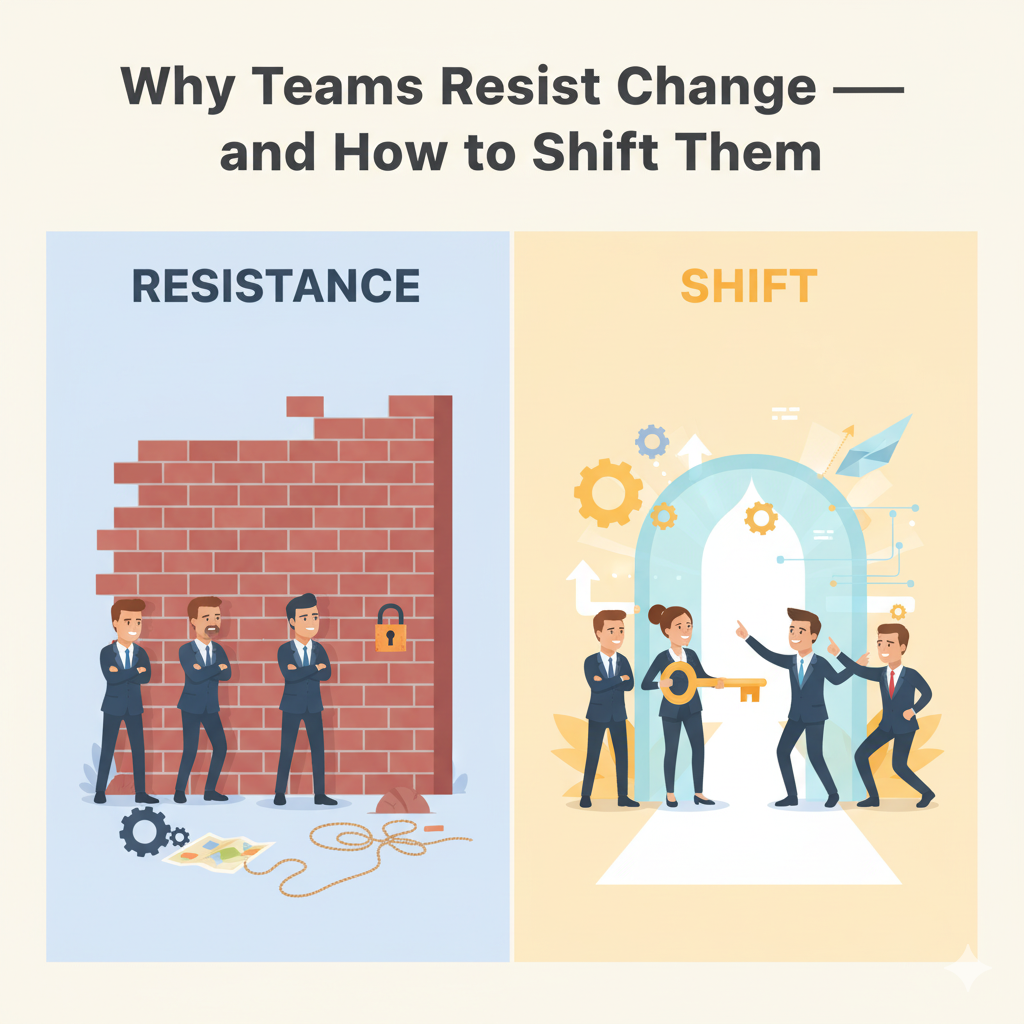

Stop telling your team to innovate. Start building the environment where innovation is inevitable.
Many CEOs expect continuous growth, yet their teams are stuck in cycles of reactive problem-solving. True growth comes from proactive system design and redesign, not just fixing what’s broken.
Here’s what you, as a CEO, should be doing to inspire your team to proactively design and redesign systems for continuous business growth 👇
1. Champion a “Systems Thinking” Mindset
Why it matters: Your team needs to see the interconnectedness of processes, not just individual tasks.
How to do it:
Educate: Provide resources and training on systems thinking principles.
Frame challenges: Instead of asking “How do we solve this problem?”, ask “How can we redesign the system to prevent this problem from recurring and enable future growth?”
2. Foster Psychological Safety
Why it matters: System redesign often involves questioning existing norms and admitting past inefficiencies. This requires a safe space to experiment and fail.
How to do it:
Celebrate learning from failures: Share examples of how mistakes led to better systems.
Encourage dissent: Actively seek out differing opinions and make it clear that challenging the status quo is valued.
3. Empower with Autonomy & Resources
Why it matters: Teams need the freedom and tools to act on their insights.
How to do it:
Decentralize decision-making: Give teams ownership over their systems and the authority to change them.
Allocate “design time”: Dedicate specific time and resources for system analysis and improvement projects, beyond day-to-day operations.
4. Model Continuous Improvement Personally
Why it matters: Your actions speak louder than your words.
How to do it:
Share your own learning: Be transparent about systems you’re personally redesigning (e.g., your meeting structures, decision processes).
Ask for feedback: Invite your team to evaluate your own systems, showing vulnerability and commitment to growth.
5. Connect Design to Impact (and Reward It)
Why it matters: People are motivated when they see the tangible results of their efforts.
How to do it:
Showcase successes: Publicly acknowledge and celebrate teams who have redesigned systems that contributed to growth.
Tie incentives: Integrate system improvement metrics into performance evaluations and recognition programs.
🔥 The takeaway: Your role isn’t just to set growth targets; it’s to cultivate an environment where your team instinctively looks for systemic opportunities to achieve and exceed those targets.
Because continuous growth isn’t a happy accident—it’s the deliberate outcome of continuously improving systems.