
Leading organisational change from the top means achieving genuine alignment among the senior leadership team before execution begins. McKinsey’s Organisational Health Index research shows organisations with strong top-down change management clarity are more than four times as likely to successfully execute strategic initiatives.
Key Highlights
- Change management failure almost always traces to unresolved disagreement at the executive level, not the middle.
- Middle managers cannot resolve conflicts that leadership has not resolved, as they lack the authority to do so.
- McKinsey OHI shows top-aligned organisations are 4x more likely to successfully execute strategic change.
- Culture shifts when leaders publicly model new behaviours, not when they announce them in town halls.
Why Does Delegating Organisational Change to Middle Management Lead to Failure?
Middle management is set up to fail when change is pushed down without first being resolved at the top. Three patterns consistently drive this change-management failure: executive misalignment that multiplies downward, accountability without authority, and a cultural modelling gap only the executive team can close.
- The Executive Misalignment Multiplier
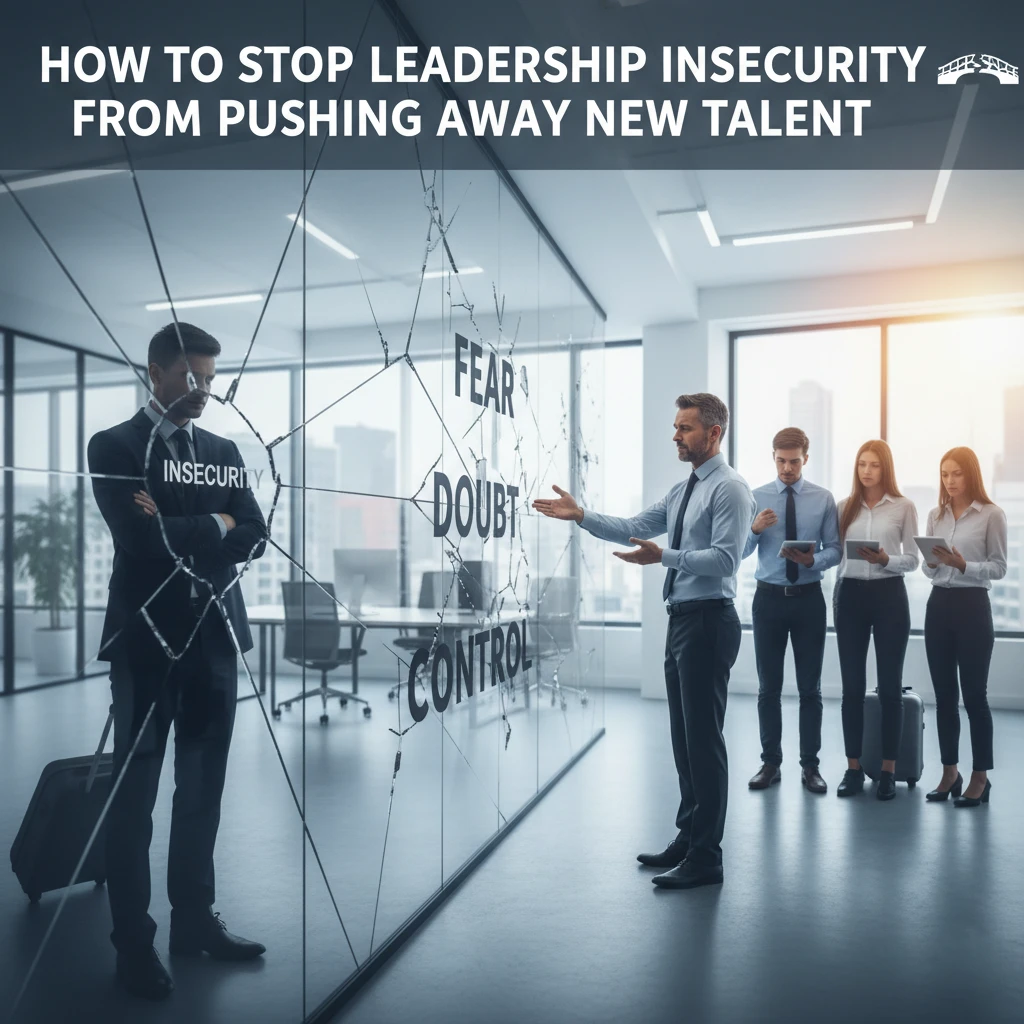
Minor disagreements among CXOs do not stay minor. When two senior leaders interpret the same strategic goal differently, every team under them picks up that inconsistency. By the time the message reaches the people doing the actual work, it has fractured into contradictory priorities. Teams work hard, but in different directions.
McKinsey’s Organisational Health Index makes this concrete. Organisations that prioritise sharp executive alignment and top-down directional clarity are more than four times as likely to successfully execute strategic initiatives. When leadership teams transmit conflicting messages, execution drag multiplies at every layer below them.
- Execution Without Authority
Middle managers are expected to drive new behaviours, challenge legacy ways of working, and hold teams accountable to a new standard. But they cannot override decisions made by peers or seniors. They cannot change what gets rewarded. They cannot resolve a conflict between two business functions whose heads disagree at the top. They work with what they have, and the transformation stalls.
- The Cultural Modelling Gap
Culture is not what is written in a values document. It is what leadership tolerates and rewards, day after day. If the CEO still approves every decision even after launching a delegation initiative, the culture of centralised authority does not change, no matter how many training sessions are run for middle management. Culture shifts when the people at the top visibly change what they do, not when they ask others to do it for them.
How to Lead Organisational Change From the Top Down
Leading organisational change from the top requires a phase-wise approach. Start with executive alignment, governance design, unified communication downward, and public behaviour modelling by leaders.
Phase 1: Achieve Unanimous Executive Alignment
Before anything reaches the wider organisation, the leadership team must resolve its own disagreements: genuine alignment on what is changing, why, what success looks like, and what the non-negotiables are. This has to happen before the initiative goes public. Once inconsistency becomes visible to the organisation, trust in the transformation drops, and it is very difficult to recover.
Phase 2: Establish Decision Rights and Governance
Transformation creates ambiguity — who decides what, which leader owns which outcome, and what happens when two departments have conflicting priorities. Without clear decision rights, middle managers fill the vacuum with guesswork.
Every ambiguous situation becomes a bottleneck or an escalation. Defining explicit accountability structures at every level removes the grey areas that slow decisions and create confusion across the organisation.
Phase 3: Communicate on a Single Strategic Frequency
Once leadership is aligned and governance is clear, middle managers can receive a brief they can actually work with: one message, one set of priorities, one execution blueprint.
The job of the executive team is not to cascade a hundred priorities simultaneously. It is to give people below them enough clarity to make good decisions without constant escalation. If middle managers spend significant time managing up rather than executing, the clarity coming from the top is insufficient.
Phase 4: Model Expected Behaviours Publicly
Transformation does not stick through announcements. It sticks through what leaders visibly do. If the new model requires faster decisions, CXOs need to stop sitting on approvals for two weeks.
If the culture shift requires greater collaboration, leaders need to be seen collaborating in ways the organisation can observe. The fastest way to end a transformation is for the executive team to demand behaviour changes they are not willing to adopt themselves.
How Does Organisational Change Consulting Accelerate Top-Down Transformation?
Organisational change consulting closes the gap between strategy and execution by addressing the conditions that determine whether an organisation can actually change at scale. It focuses on how change gets implemented inside real operations, with real constraints, and real people who may resist, disengage, or pull in different directions.
Organisational change consulting covers six areas:
- Organisational diagnostics: Before any plan is built, a change management consultant identifies where alignment is breaking down, where execution is inconsistent, and what structural issues are slowing the organisation down. Most leadership teams discover that what looked like a people problem or a middle-management problem is, on closer examination, a misalignment problem at the top.
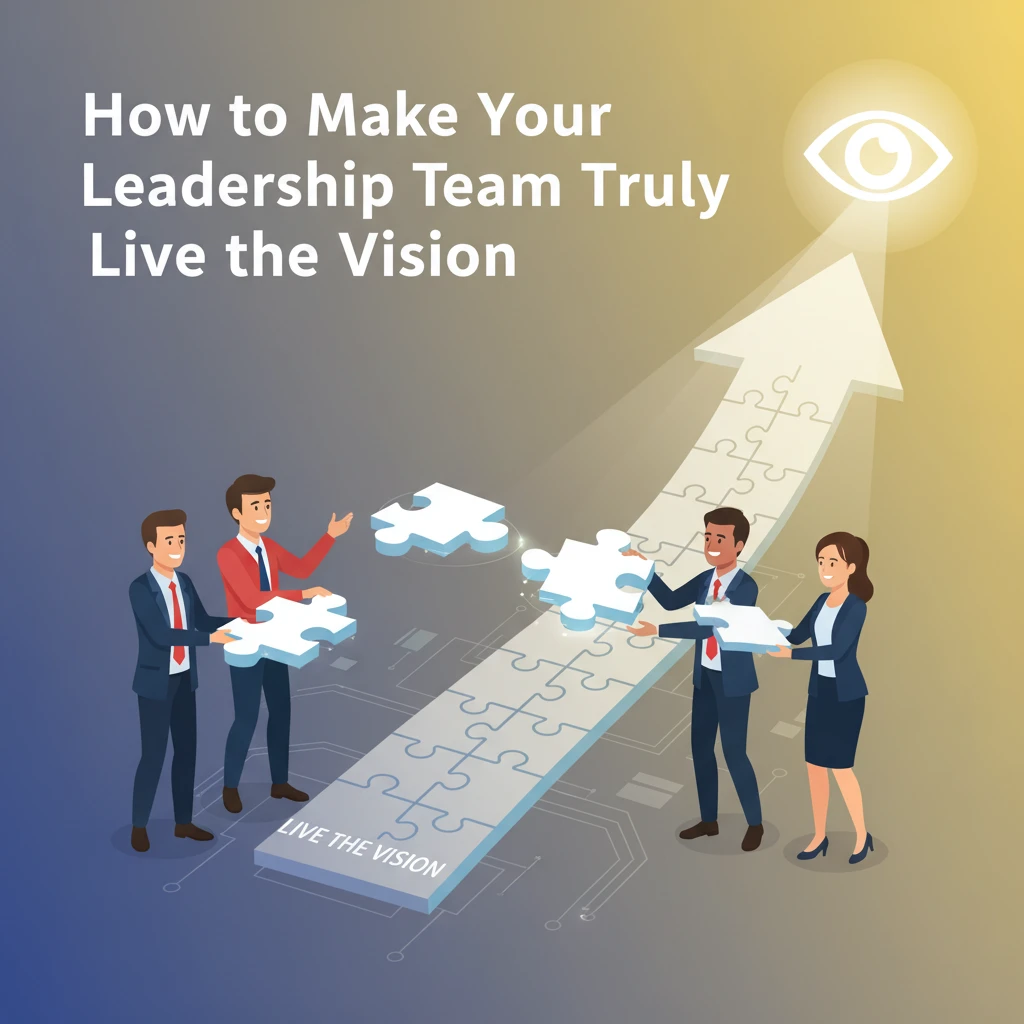
- Leadership alignment: The people at the top need to be genuinely operating from the same understanding of direction, priorities, and non-negotiables. Our VSA framework (Vision, Strategy, and Alignment) creates this alignment in a structured, measurable way before execution begins. What comes out is not a slide deck. It is a shared operating understanding that every leader in the room can articulate consistently to their own teams.
- Change strategy: It translates that alignment into a practical roadmap tied to real decisions, real timelines, and real accountability, not a document that sits in a folder.
- Execution planning: Breaks the strategy into clear ownership: who is doing what, by when, and how progress will be tracked. Without this step, strategy stays at the level of intention.
- Capability building: Equips leaders with the decision-making frameworks, accountability structures, and communication norms they need to operate effectively in the new model.
- Performance tracking: Creates visibility into whether change is actually happening- not activity tracking, but outcome tracking. Are behaviours changing? Are results shifting? Is the organisation moving?
Planet Ganges’ organisational change consulting helped a Bangalore-based company growing from 50 to 200 people realign the leadership team around a clear structure, build accountability systems, and create a rhythm of execution that scaled with the organisation.
Transformation Starts Where You Stop Delegating It
Transformation is a top-down leadership discipline. Middle management is responsible for executing clear direction, but creating that clarity is entirely the job of the executive team.
When change fails, the post-mortem almost always reveals the same cause: leadership handed down an ambiguous mandate and expected middle management to resolve what they themselves had not.
Align at the top first. Everything else becomes significantly more manageable.
If your organisation is struggling with execution gaps, leadership misalignment, or a culture transformation that is not translating into results, reach out to Planet Ganges. We work with founders and CXOs across India and the UAE to close this gap through organisational change consulting engagements built around our proprietary systems designed to create alignment at the top and embed change through the organisation.
FAQ
How is organisational change consulting different from change management?
Change management focuses on communication, adoption, and behavioural support during implementation. Organisational change consulting addresses the conditions that determine whether the organisation can change at scale — strategy realignment, governance structures, leadership accountability, and performance architecture. The best engagements combine both.
When should a company bring in an organisational change consultant?
When growth is stalling despite a clear strategy, when teams are misaligned without anyone being able to identify exactly why, when execution is consistently falling short, or when previous transformation efforts have not delivered lasting results. The earlier external support is brought in, the less structural damage accumulates.
What is the role of executive leadership in organisational change?
Executive leadership is the starting point, not the sponsor. Leaders at the top must achieve alignment on direction, establish decision rights, and publicly model the behaviours the transformation requires before execution reaches the rest of the organisation. Change that begins in the middle without this foundation will stall or reverse.